Learn about the causes of Ulcerative Colitis & find a practitioner in Auckland, Hamilton, Bay of Plenty, Wellington, Christchurch, Dunedin to help you overcome Ulcerative Colitis within New Zealand.
Ulcerative colitis is a long-term and intermittent inflammatory bowel disease that causes ulcers in the colon and rectum. The main symptom is diarrhoea often mixed with blood and mucous, and can be accompanied by tiredness, abdominal pain and fever.
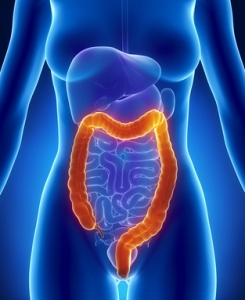
What causes ulcerative colitis is not fully understood but genetic, environmental and immune system factors may be involved.
Studies
have found that 20% of people with ulcerative colitis also have a close
relative with the condition suggesting that genetics play a part in
causing the problem. Evidence also points to the environment in which a
person lives as a possible cause. Ulcerative colitis is more common in
urban areas particularly in the northern parts of Western Europe and
America. Other environmental factors such as diet, pollution and
smoking may also be to blame.
The immune system may also cause
ulcerative colitis by continuing to cause inflammation even when no
infection is present (known as an autoimmune condition).
Symptoms of ulcerative
colitis depend on the level of inflammation to the colon but the common
symptoms to most cases are abdominal pain and diarrhoea that contains
blood and mucus.
Other symptoms include:
If you suspect you may have ulcerative colitis then first visit your
GP. Your GP will take a history of your symptoms and check for signs of
anaemia and tenderness around the stomach. They will then take a blood
and stool sample. A blood test will determine if you are anaemic and
also if there is any presence of disease. A stool sample will be used
to check for infection.
To confirm the diagnosis, an examination
of the bowel will be required to check for inflammation in the colon.
This is done using a sigmoidoscope which is a thin tube with a camera
that is inserted into the rectum. The procedure is not painful and will
check how much of the lower part of the colon is affected. If more than
the colon is affected you will require a colonoscopy.
Similar to
the sigmoidoscope, a colonscope is inserted into the rectum but can
examine the entire colon, not just the lower part. Before the
examination your bowel will need to be completely empty so you'll be
given strong laxatives.
"Bridging the gap between mind, body and spirit is your ultimate key to true happiness"


 Comvita® UMF® 20+ Manuka Honey
contains pure New Zealand Manuka Honey. New Zealand Manuka has long
been valued for its health-maintaining effects and Manuka Honey is
gaining worldwide recognition for its unique properties.
Comvita® UMF® 20+ Manuka Honey
contains pure New Zealand Manuka Honey. New Zealand Manuka has long
been valued for its health-maintaining effects and Manuka Honey is
gaining worldwide recognition for its unique properties.